European Home Life
European domestic life in the 1800s
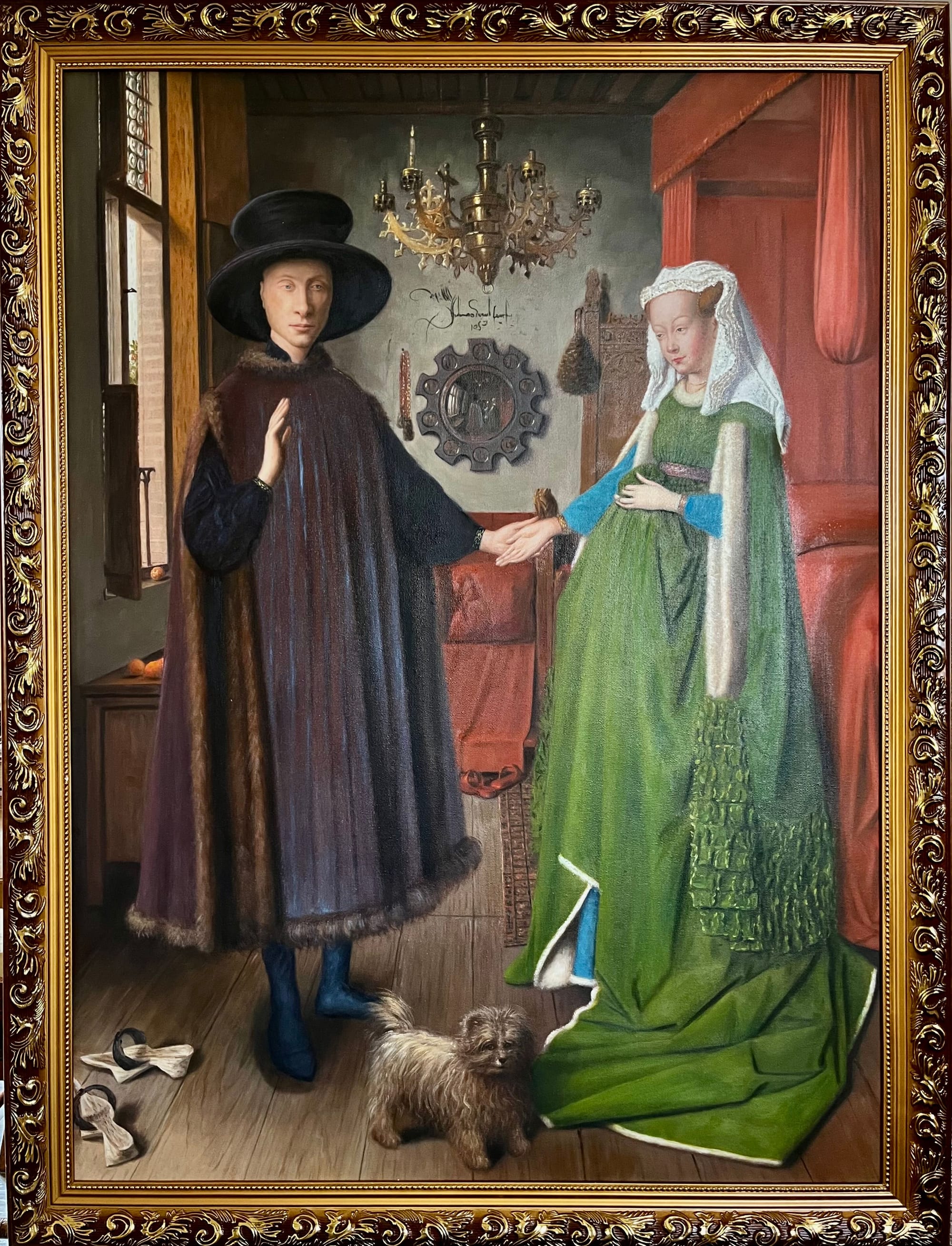
The Arnolfini Portrain by Jan Van Eyck
A quiet room, a solemn gesture, and a mirror that sees more than the eye—Jan van Eyck’s Arnolfini Portrait captures a moment suspended in time. Thought to depict the Italian merchant Giovanni di Nicolao Arnolfini and his wife in their Bruges home, this double portrait is both a celebration of union and a showcase of wealth, fidelity, and domestic life. But it’s the mirror that drew me in. Hung between the couple, it reflects not just their backs but the entire room—replicating the scene in miniature, with astonishing precision. Two additional figures appear, one possibly the artist himself, suggesting presence, witness, and layered meaning. For the 1400s, this was nothing short of ingenious: a technical marvel and a conceptual leap that still feels modern. The original hangs in The National Gallery, London, where its quiet brilliance continues to captivate.
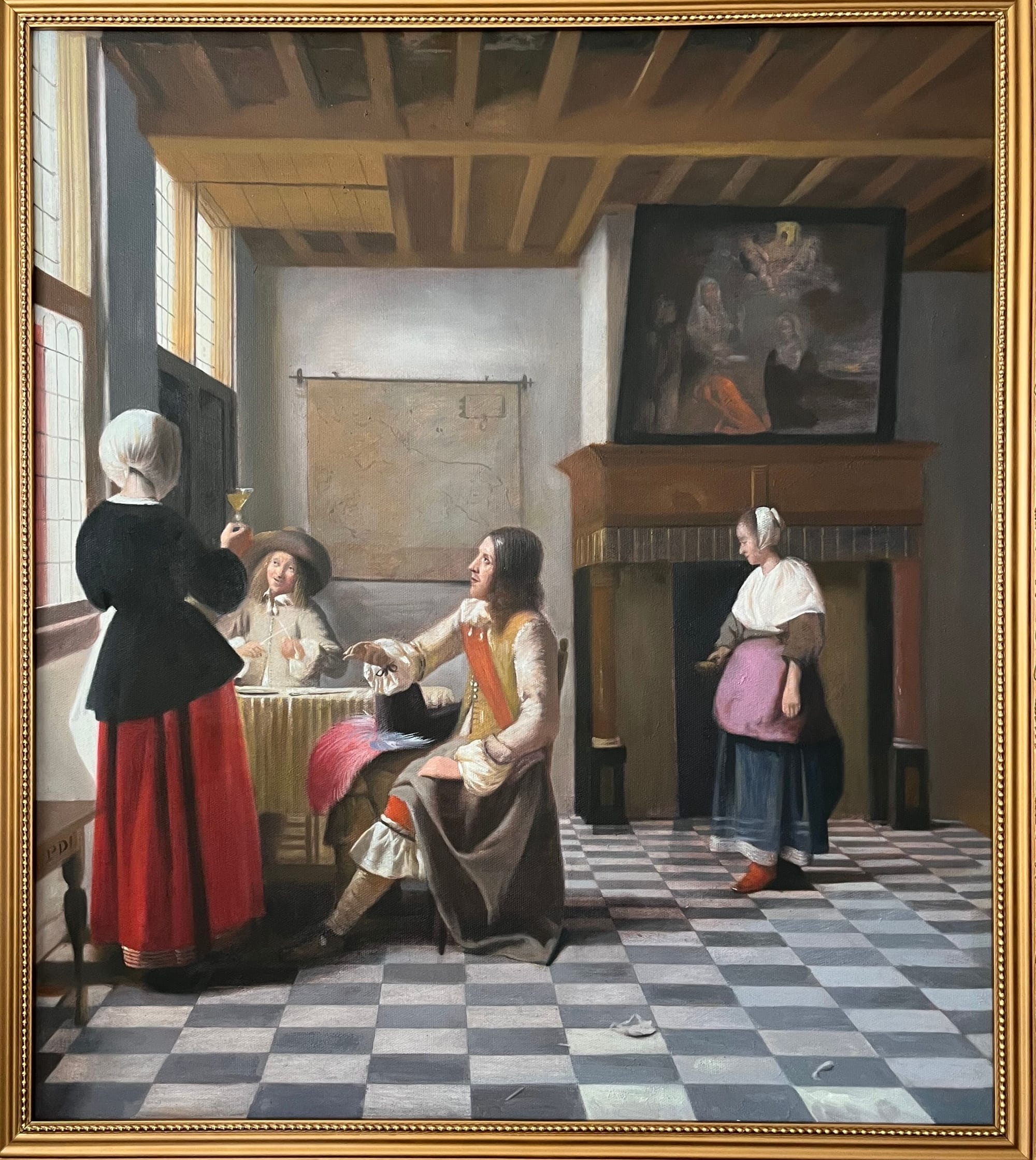
A Woman Drinking with Two Men by Pieter de Hooch
This Dutch Golden Age interior shows a woman raising a glass beside two men, one playfully using clay pipes like a violin while the other gestures as if conducting. The warm light, tiled floor, and precise perspective reveal de Hooch’s skill in creating intimate domestic spaces. The woman’s turned back and the men’s theatrical gestures keep the scene deliberately ambiguous, suggesting music, flirtation, or simple sociability. The household reflects the comfortable Dutch urban middle class — families of modest prosperity such as merchants, craftsmen, or clerks. The clean interior, orderly furnishings, and presence of a maid signal a well‑run home, echoing seventeenth‑century ideals of domestic order. Now in the National Gallery, London, the painting blends everyday life with subtle psychological tension.
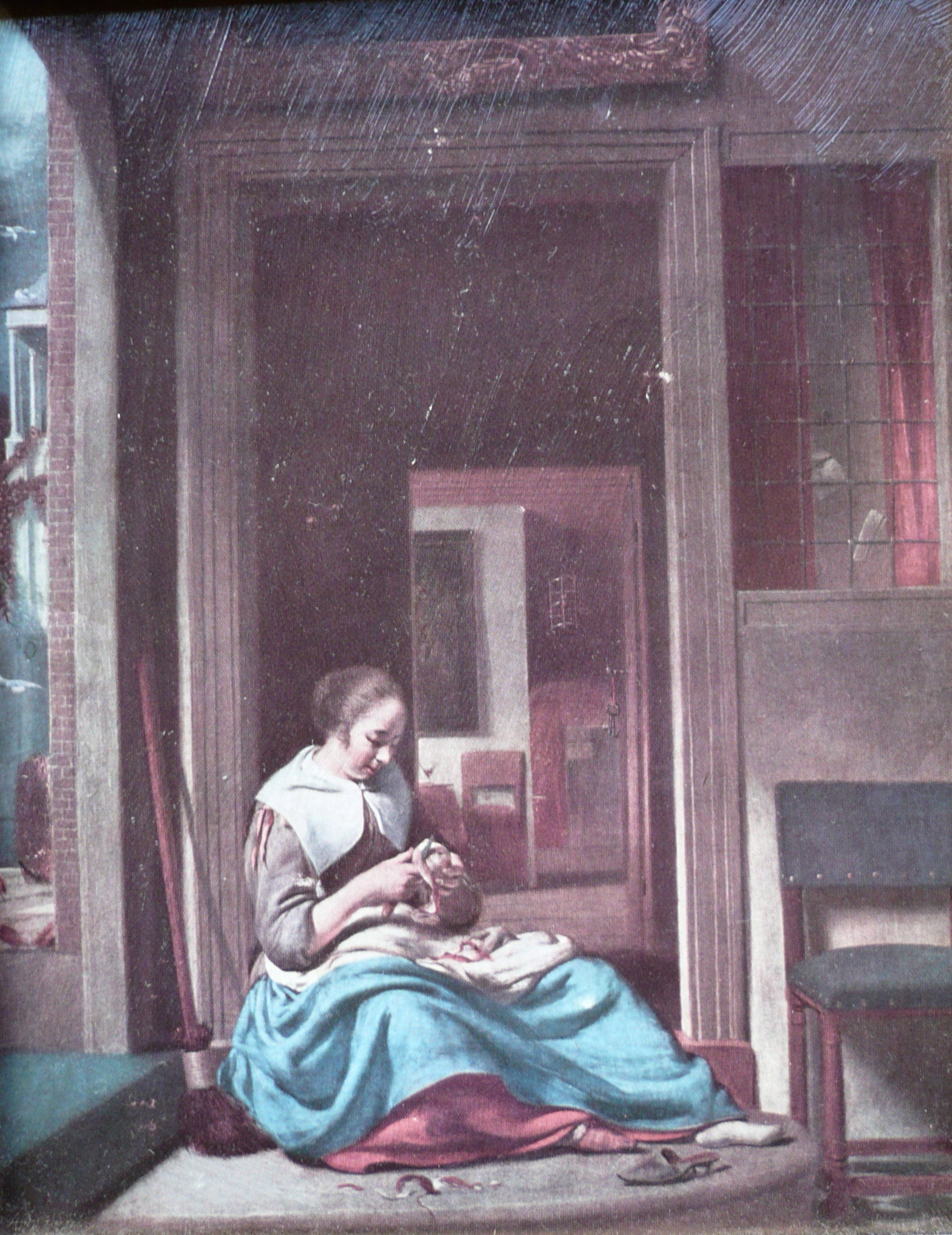
Girl Peeling an Apple by Cornelis Bisschop
urchased in Lanark, Scotland, this classic oil by Cornelis Bisschop, painted in 1667, captures a moment of quiet domesticity with remarkable emotional depth. The young girl, absorbed in the simple act of peeling an apple, is rendered with tender precision—her posture relaxed, her gaze downward, as if lost in thought. The soft play of light and texture brings warmth to the scene, while the restrained palette and subtle chiaroscuro evoke a sense of intimacy and stillness. But who is she? Her modest clothing and quiet task suggest she may be a domestic servant, caught in a moment of routine. Yet her poise, the delicacy of her gesture, and the dignity with which she’s portrayed hint at something more—perhaps she is the Lady of the Manor, engaged in a quiet ritual of her own choosing. Bisschop leaves the question open, allowing the viewer to reflect on class, identity, and the emotional richness of the everyday.